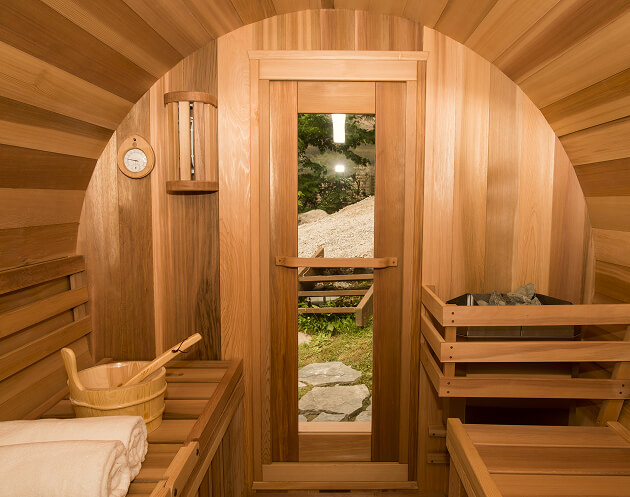
For more than 60 years, SaunaFin has helped customers create their ideal sauna with quality materials, expert guidance and lasting value. Founded in Toronto in 1962, we’ve grown to serve customers across Canada and the United States while maintaining the personal service and attention to detail that have shaped our business from the beginning.
Every space is different, and every customer has their own vision. From custom sauna material kits to carefully selected heaters and accessories, we offer the products and expertise to help bring that vision to life. Whether you’re planning your first sauna or building on years of enjoyment, our team is here to help you choose the right solution for your space, preferences and budget.
Your Sauna. Your Way.
60+ Years
Manufacturing Saunas Since 1962
100+
Options & Accessories
50 - 100
Saunas a Year Installed Locally
15,000+
Saunas Sold Internationally
We ship mainly to Canada and USA.
Sauna Heaters and Steam Generators are usually shipped by UPS or Purolator. Sauna Material Kits and Pre-Fab saunas are shipped via transport truck. (We mostly use UPS Freight and Old Dominion to USA, Western Canada and Maritime-Ontario for Canada). We do not use brokers or agencies. We prefer dealing with large shippers that have local depots and are less likely to pass off freight to third party carriers. (A little more costly, but more reliable-You can't put a price on "peace of mind").
Yes, but not the way you think. This an area of common confusion for saunas. People associate the need for ventilation with a bathroom and shower (or steam shower). You ventilate a bathroom to remove excess moisture. Saunas are by nature a dry environment-you are essentially baking the air. Typical sauna humidity is around 10%' with momentary spikes when water is splashed on the rocks. Your average household humidity is around 40%. The sauna is in fact much dryer than the rest of your home.
Sauna venting does not mean venting to the outdoors as you would for a shower. It means cross ventilation. It refers to an inlet (low behind heater) and an outlet (generally high in opposite corner from heater). The purpose of sauna ventilation is to move the air from the heater to the seating area. In general, you should not vent to the outdoors, but into the adjoining room so that the warmed air is re circulated.
(Remember that saunas are dry heat, there is no concern of humidity spreading all over the house.)
It is not always essential to have vents for order for sauna to operate properly. If your sauna installation will allow you access to install vents at a later time, you may try sauna without vents with a contingency to add at a later date if it is determined they are required. If venting openings are not easily accessible (i.e. exterior wall), there are options redirect vents by ducting to open wall.
Indoor: on average 20-30 minutes
Outdoor: depends on region and season. Cold climate, cold day - could be 40-60 minutes.
Commercial saunas should have a drain in the center of the floor (sloped to the drain) to facilitate cleaning.
Most residential saunas do not have drains. Water should only be used in moderation.
(If you are doing a complete renovation or new build and are putting in a new bathroom, shower, etc, the addition of a floor drain may be considered but not necessary.)
|
Not sure which product to choose? |
What grade and type of cedar is being used?
Are heaters, controls, and accessories included in the advertised price?
Is the sauna customizable to fit my space and layout?
What thickness are the walls and interior materials?
Does the company specialize specifically in saunas and steam baths?
Is local support or technical guidance available after purchase?
Are replacement parts and service readily available?
Is the sauna designed for indoor or outdoor performance requirements?
What type of heater is recommended for my sauna size and usage?
How long has the company been manufacturing or supplying saunas?